Built by People Who Love This Planet
Regen Compute didn’t start in a tech incubator. It started in the soil — with people who spent decades working alongside farmers, ecologists, and indigenous communities before ever writing a line of code.
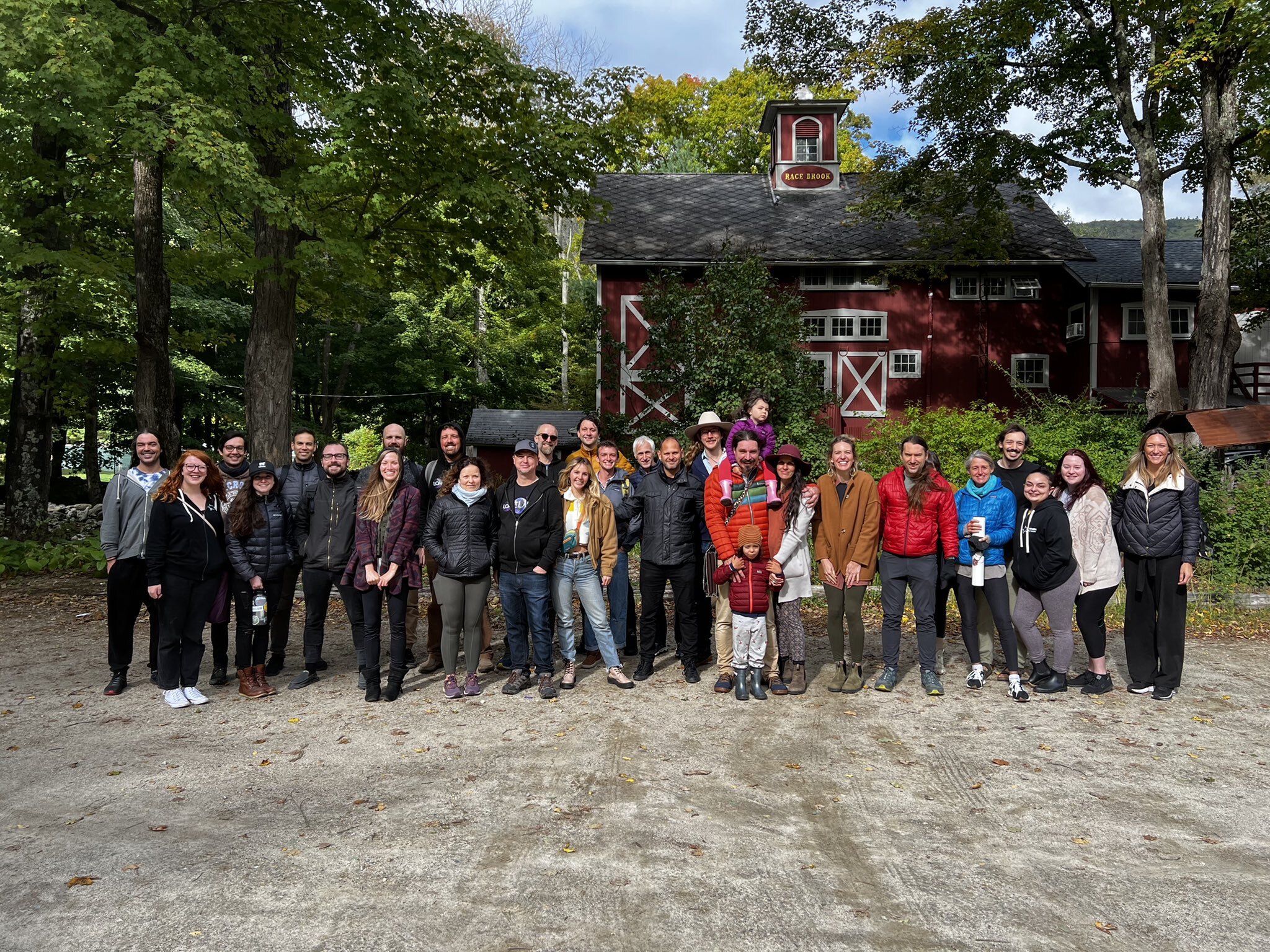
Regen Compute didn’t start in a tech incubator. It started in the soil — with people who spent decades working alongside farmers, ecologists, and indigenous communities before ever writing a line of code.
In the spring of 2017, three people asked a dangerous question: What would it look like to put blockchain technology to work for planetary regeneration?
Gregory Landua, Christian Shearer, and Brecht Deriemaeker weren’t crypto speculators. They were permaculturists, ecological designers, and systems thinkers who had spent years in the field — getting their hands dirty building food forests, restoring degraded land, and helping farming communities around the world develop regenerative practices. They understood something that most of the tech world didn’t: the planet doesn’t need better carbon accounting spreadsheets. It needs economic systems that actually reward people for healing ecosystems.
That insight became Regen Network — a public blockchain purpose-built for ecological accounting. Not just carbon. Biodiversity. Soil health. Watershed restoration. Marine ecosystems. Animal welfare. The full picture of what it means to regenerate a living planet.

Gregory co-authored Regenerative Enterprise in 2013, one of the foundational texts of the regenerative movement. He co-founded Terra Genesis International, a consultancy that helps global brands transform their supply chains into regenerative systems. He holds a master’s in Regenerative Entrepreneurship and a Permaculture Design Certificate. Gregory isn’t building Regen Network because blockchain is interesting — he’s building it because he’s spent his career trying to get capital to flow toward healing the planet, and this is the best tool he’s found.
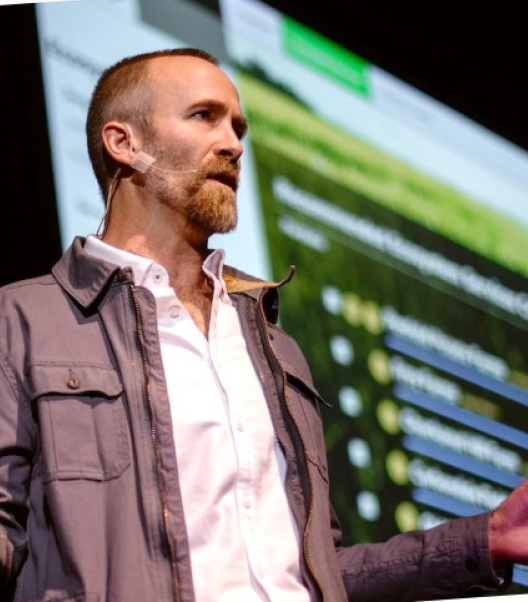
At 24, Christian founded the Panya Project in Chiang Mai, Thailand — now one of the most well-known permaculture education centers in Southeast Asia. Over 15 years, he worked alongside farmers across Thailand, Malaysia, India, Taiwan, Barbados, Ecuador, Nicaragua, and the Philippines. He co-founded Terra Genesis International with Gregory before co-founding Regen Network, where he served as CEO and later Chief Investment Officer. He built Regen Compute because he believes AI developers deserve a real, verifiable way to account for their ecological footprint — not greenwashing, but actual credits retired on a public ledger.

Gisel holds a PhD in Biological Sciences specializing in Landscape Ecology. Before joining Regen Network, she was an Assistant Professor of GIS at Universidad Nacional de Mar del Plata in Argentina and consulted for the Inter-American Development Bank on remote sensing and environmental assessment. For over seven years at Regen, she has led the science that makes ecological credits credible — designing the MRV (Measurement, Reporting, Verification) systems that bridge remote sensing data with on-the-ground ecological outcomes. She’s the person who ensures that when we say “verified ecological credit,” we mean it. Her work connects methodology developers, land stewards, and project proponents into a system where ecological claims can be independently verified.
Regen Network founded. Whitepaper written. Three co-founders take a European tour to build community around the idea of blockchain for planetary regeneration.
Selected for the Techstars Sustainability Accelerator in partnership with The Nature Conservancy. Regen becomes an official Techstars company.
Signed as lead maintainer of the Cosmos SDK by the Interchain Foundation. Sold 124,000 carbon credits to Microsoft — one of the largest soil carbon credit issuances in Australia. Microsoft selected Regen as one of only 15 companies globally to source credits from.
Regen Ledger mainnet launch — a sovereign proof-of-stake blockchain purpose-built for ecological accounting. Regen Foundation begins operations, tasked with distributing 30% of REGEN tokens to smallholder farmers, indigenous peoples, and scientific researchers.
Regen Compute launches — bringing Regen Network’s ecological infrastructure directly into AI developer workflows via MCP. Individual developers can now fund verified ecological regeneration as part of their daily work.
Regen Compute is one of my first “vibe coding” projects — built largely in collaboration with AI tools, the very tools this project exists to serve. I say that not as a gimmick, but because it’s actually the point.
For years, building the ecological asset infrastructure at Regen Network was a slog. Important, necessary, deeply meaningful work — but slow. Building a blockchain, designing credit registries, negotiating with land stewards across continents, writing smart contracts, wiring up marketplace flows. Every step was hard-won. We were a small team trying to build public goods infrastructure that the world desperately needs, and the pace never felt fast enough for the urgency of the moment.
Then these AI tools arrived. And suddenly, a single person with deep domain knowledge and a clear vision could build in weeks what used to take a team months. Regen Compute — the MCP server, the landing page, the subscription system, the on-chain retirement pipeline, the dashboard, the API, the email notifications — all of it was built by one person working with Claude Code. Not because I’m a 10x engineer (I’m not), but because the tools finally caught up to the ambition.
That’s what excites me most about where we are right now. The hard infrastructure is built. The ecological credits are real. The blockchain works. The verification is solid. And now, with AI as a creative partner, we can finally move at the speed the planet needs. We can build the bridges between this ecological infrastructure and the millions of developers who want to do the right thing but didn’t have an easy way to do it.
If you’re a developer reading this and thinking “I could build something on top of this” — you absolutely can. And it’ll go faster than you think.
AI is extraordinary. It’s also hungry — for energy, for water, for rare earth minerals. Every prompt, every training run, every inference has an ecological cost. Most of the industry pretends this cost doesn’t exist, or buries it in corporate sustainability reports nobody reads.
We think there’s a better way. Not guilt. Not greenwashing. Not vague promises about carbon neutrality by 2040. Instead: real ecological credits, retired permanently on a public blockchain, funded directly by the people who use AI every day.
Every dollar you contribute is transparently allocated: 85% goes directly to ecological credit purchases, 5% to REGEN token burn supporting the network, and 10% to operations. Every retirement is recorded on-chain. Every certificate is publicly verifiable. No trust required — just check the ledger.
Regen Network is open infrastructure. The ecological credit system, the blockchain, the marketplace, the APIs — they’re all public goods. And Regen Compute is fully open source. We need developers who care about this planet to help build what comes next.
TypeScript MCP server with Express API. Add credit types, improve footprint estimation, build integrations for new AI tools.
CosmWasm smart contracts, Cosmos SDK modules, ecological state protocols. The chain is live and composable.
VS Code extensions, CI/CD plugins, API wrappers. Any tool that developers use can become a channel for ecological contribution.
Discord, governance proposals, working groups. This is a real community of people who believe technology should serve life.
You don’t need to be a climate scientist. You just need to care. Subscribe, and every month your AI usage funds real ecological regeneration — verified, permanent, and yours to share.